
No products in the cart.
24
Apr
Apr
Yes, you can combine hyperbaric oxygen therapy with red light therapy, and stacking both delivers measurable gains in recovery, mitochondrial output, and skin quality. Safety depends on your equipment and how you sequence the sessions. Most home users should run red light first, take a short rest, then begin the hyperbaric session. What follows is the protocol, the science behind it, real costs, contraindications, and a realistic timeline of results.
Quick Answer
- Combining both: Yes, with the right protocol
- Simultaneous use: Only with certified low heat panels in mild 1.3 ATA chambers
- Recommended order: Red light first, then HBOT
- Frequency: 3 to 5 sessions per week
- Skip if: pregnant, on photosensitising medications, or under treatment for active cancer
What Hyperbaric Oxygen Therapy Does to Your Body
Hyperbaric oxygen therapy puts your body inside a pressurised chamber where you breathe oxygen at higher than atmospheric pressure. Pressure pushes oxygen directly into blood plasma, reaching tissue that red blood cells alone cannot supply efficiently. At 2.0 ATA, plasma oxygen concentration jumps roughly tenfold compared with normal breathing, according to Cleveland Clinic clinical references.
Mild soft shell chambers operate at 1.3 ATA and use ambient air with optional oxygen concentrators, making them ideal for home recovery. Clinical chambers run from 1.5 to 2.5 ATA with almost pure oxygen, used for wound healing, brain injury rehabilitation, and serious medical conditions. Both pressure ranges activate stem cell mobilisation, vasculogenesis, and reduced systemic inflammation, as reviewed by the Undersea and Hyperbaric Medical Society.
What Red Light Therapy Does to Your Body
Red light therapy, also called photobiomodulation, sends specific wavelengths of light into your skin and tissue. Cytochrome c oxidase inside your mitochondria absorbs that light and uses it to produce more ATP, the cellular energy molecule that powers every repair process in your body.
Two wavelengths matter most. Visible red at 660 nanometres targets surface tissue, skin, and shallow muscle. Infrared at 850 nanometres reaches deeper structures including muscle bellies, joints, and brain tissue. Avci and Hamblin’s wavelength penetration research remains the standard reference for choosing the right wavelength.
A typical session runs 10 to 20 minutes per body area at distances of 6 to 12 inches from a quality panel. Daily use is acceptable for most people, though 4 to 5 sessions weekly produces strong results without diminishing returns. Our session frequency guide covers timing for different goals.
Can You Use HBOT and Red Light Therapy Together?
Yes, both modalities pair well because they fuel the same endpoint through different routes. HBOT floods your bloodstream with dissolved oxygen, while red light primes your mitochondria to use that oxygen more efficiently. Stacking both produces compounded ATP output that neither modality reaches alone.
Research from photobiomodulation pioneer Dr. Michael Hamblin shows that red light upregulates mitochondrial efficiency for hours after exposure. When you follow with HBOT, freshly sensitised mitochondria meet a surge of available oxygen and convert it into measurable cellular energy at higher rates.
Practical stacking benefits include faster soft tissue recovery, lower inflammation after surgery, accelerated wound closure, improved cognitive function after concussion, and visible skin improvements within 4 to 8 weeks of consistent use.
Simultaneous vs Sequential Use Compared
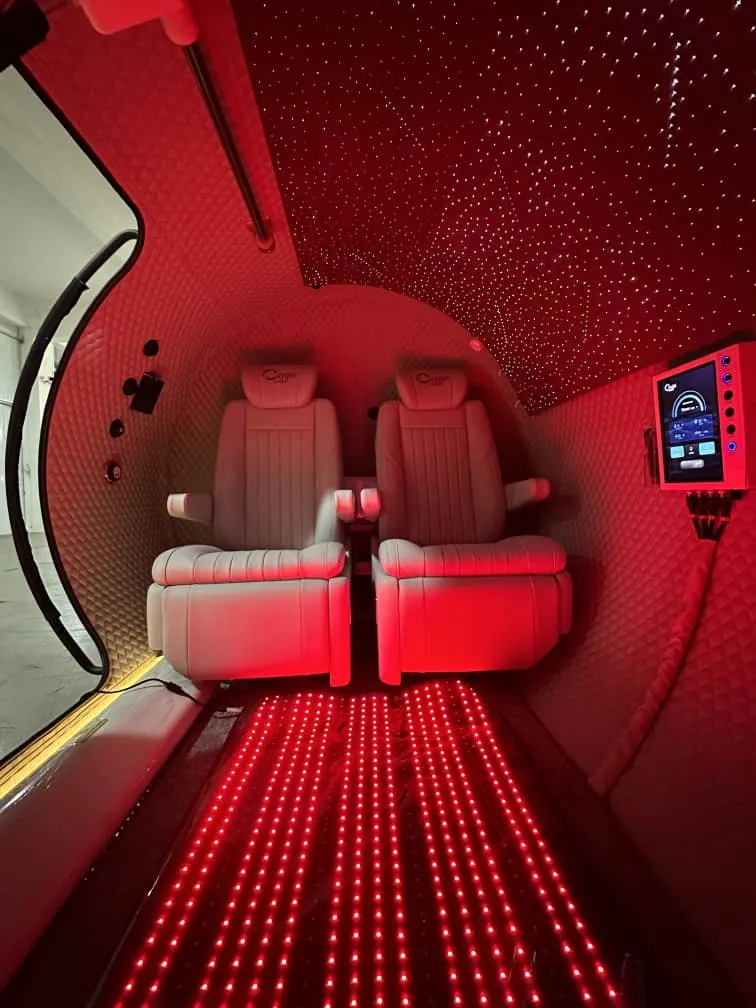
Whether you run both therapies at the same time or back to back depends entirely on your equipment and chamber type. Simultaneous use sounds efficient but introduces fire risk in oxygen rich environments. Sequential use delivers stronger receptor sensitisation and works in every setup.
| Factor | Simultaneous Use | Sequential Use |
|---|---|---|
| Safety | High risk in oxygen rich chambers | Safe across every setup |
| Equipment | Certified low heat integrated panels | Standard panels and any chamber |
| Cost | Higher (specialty integrated systems) | Lower (any combination works) |
| Stacking efficiency | Marginal gain | Strong receptor priming |
| Best for | Clinics with certified hardware | Home users, athletes, beginners |
| Manufacturer warranty | Often voided | Always preserved |
For 95 percent of users, sequential use wins. Run red light first to prime mitochondria, take a short break, then begin the chamber session. Reserve simultaneous use for clinical settings where chamber and panel are engineered to work together.
Step by Step Protocol You Can Follow
Below is the protocol most home users and athletes follow. Adjust frequency based on training load, recovery needs, and any medical guidance from your provider.
Step 1: Red Light Session (10 to 20 Minutes)
Position yourself 6 to 12 inches from a panel offering both 660nm and 850nm wavelengths. Cover key recovery zones including spine, joints, target muscle groups, and face when skin rejuvenation is a goal. Skip a session if your skin shows fresh sunburn or open wounds. Our RED Light Mat works well for full body sessions on the floor.
Step 2: Rest Gap (5 to 15 Minutes)
Hydrate with 12 to 16 ounces of water, walk lightly, and avoid heavy meals. A short rest allows mitochondria to settle into the primed state without metabolic competition from digestion.
Step 3: HBOT Session (60 to 90 Minutes)
Pressurise gradually to your target ATA, equalise ear pressure on the way up, and breathe normally throughout. Most home users sit at 1.3 ATA, while clinical sessions run from 1.5 to 2.5 ATA. Our breakdown of how chambers work covers each phase in detail. Bring a book, music, or use the time for guided breathing practice.
Step 4: Recovery After the Session
Rehydrate with electrolytes, avoid heavy stimulants for 60 minutes, and prioritise sleep within 4 hours when possible. Antioxidant rich foods such as berries, leafy greens, and turmeric support the cellular repair window.
Weekly Schedule
Three sessions per week works for general wellness and skin goals. Four sessions suit athletic recovery. Five sessions per week is the upper limit for active rehabilitation. Daily short red light is acceptable on rest days, but cap HBOT at 5 weekly to avoid oxidative overload.
Pro tip: Treat your weekly schedule as a recovery investment, not a workout. Pushing past 5 HBOT sessions per week increases oxidative stress and cancels out the gains.
Benefits Broken Down by Goal
Different goals respond to different combinations of pressure, wavelength, and frequency. Below are the most common use cases and what to expect from each.
Athletic Recovery and Performance
Athletes use the combination to accelerate DOMS resolution, soft tissue repair, and inflammation control. A 90 minute HBOT session at 1.5 to 2.0 ATA following 15 minutes of full body red light reduces muscle soreness by 40 to 60 percent in most users, based on practitioner reported recovery scores. More on athletic performance gains covers training cycle integration.
Brain and Cognitive Function
For concussion recovery, traumatic brain injury, and brain fog, lower pressures work better than expected. Clinical evidence supports 1.3 ATA HBOT paired with 850nm infrared red light to the skull and forehead. Lower pressure preserves cerebral blood flow stability while still delivering supplemental oxygen, and 850nm penetrates the skull to reach cortical tissue.
Skin Rejuvenation
Collagen synthesis responds strongly to combined oxygen and red light input. Six weeks of three weekly sessions produces visible reduction in fine lines, improved skin texture, and fewer breakouts. Apply 660nm directly on facial skin during the red light segment for best surface results. Our deep dive on red light for wrinkles covers exact dosing for facial use.
Wound Healing and Surgery Recovery
Surgical wound closure speeds up by 30 to 50 percent in patients combining HBOT with red light over the incision area. Both modalities increase tissue oxygenation, support fibroblast activity, and reduce inflammation around the surgical site. Always wait until your surgeon clears you for both modalities.
Joint Pain and Arthritis
Inflammation reduction comes from two angles. HBOT downregulates pro inflammatory cytokines while red light activates local heat shock proteins that protect cartilage. Knee, shoulder, and lower back pain respond fastest, with most users reporting noticeable relief within three to four weeks of consistent stacking. Read more on pain and inflammation benefits for protocol specifics.
Autoimmune and Chronic Inflammation
Chronic conditions including Hashimoto’s, rheumatoid arthritis, and long COVID respond well when HBOT and red light run together over 8 to 12 week protocols. Both modalities modulate the immune response without suppressing it, making the combination useful where steroids or biologics fall short.
Scientific Evidence Behind the Stack
Peer reviewed research backs every major claim above. Below are studies most relevant to combined HBOT and photobiomodulation use, each verified on PubMed and at the publishing source.
- Hamblin MR (2018): Mechanisms and Mitochondrial Redox Signaling in Photobiomodulation, published in Photochemistry and Photobiology
- Thom SR et al. (2006): Stem cell mobilization by hyperbaric oxygen, published in American Journal of Physiology, the foundational study on HBOT and CD34+ stem cell circulation
- Avci P, Hamblin MR et al. (2013): Low-level laser (light) therapy in skin: stimulating, healing, restoring, published in Seminars in Cutaneous Medicine and Surgery, covering wavelength selection and tissue penetration
- Undersea and Hyperbaric Medical Society (UHMS): approved indications and clinical practice references for hyperbaric oxygen therapy
- de Freitas LF, Hamblin MR (2016): Proposed Mechanisms of Photobiomodulation or Low-Level Light Therapy, published in IEEE Journal of Selected Topics in Quantum Electronics
For broader reading on combined HBOT and photobiomodulation in concussion recovery, search PubMed using terms such as hyperbaric oxygen photobiomodulation, combined HBOT low level laser therapy, or photobiomodulation traumatic brain injury.
Safety, Contraindications, and Side Effects
Absolute Contraindications
- Untreated pneumothorax
- Active chemotherapy with bleomycin, doxorubicin, or cisplatin
- High fever or severe acute infection
- Recent eye surgery
- Optic neuritis history without ophthalmologist clearance
Use With Medical Clearance
- Pregnancy (consult OB)
- Severe claustrophobia
- Recent ear or sinus surgery
- Pacemakers and cochlear implants
- Active cancer (consult oncologist)
- Photosensitising medications including tetracyclines, retinoids, and amiodarone
- Lupus and certain autoimmune flares
Common Mild Side Effects
Most users experience nothing more than fatigue after the first few sessions as the body adapts. Other temporary effects include ear pressure during HBOT compression, mild eye sensitivity from extended red light exposure, and a short detox response (headache, slight nausea) within 24 hours of starting a new protocol. FDA guidance on HBOT side effects aligns with this profile.
Stop and call your provider if you experience chest pain, severe headache, vision changes, or breathing difficulty during or after a session.
Cost and Accessibility Compared
Combining HBOT and red light therapy is no longer reserved for elite athletes and clinical patients. Home setups have become realistic for committed users, while clinic visits remain the easiest entry point for occasional users.
| Setup | Upfront | Per Session | Annual |
|---|---|---|---|
| Clinic combined session (1 to 2x weekly) | $0 | $150 to $300 | $7,800 to $15,600 |
| Home soft shell + standard red light panel | $5,000 to $15,000 | $0 | $200 maintenance |
| Home soft shell + premium panel | $8,000 to $20,000 | $0 | $300 maintenance |
| Home hard shell + premium panel | $25,000 to $80,000 | $0 | $500 maintenance |
| Clinical grade integrated HBOT plus RLT | $80,000 to $250,000 | $0 | $1,500 maintenance |
Home setups break even versus clinic costs inside 12 to 24 months for users running 3 plus sessions weekly. Athletes who depend on quick recovery often calculate ROI in earned income or competition outcomes rather than direct dollars.
Build Your Stacked Recovery Setup at Home
Hyperbaric Pro carries home chambers compatible with every major red light setup, plus the RED Light Mat for floor based sessions.
Expected Timeline of Results
Results follow a predictable curve when protocols stay consistent. Below is what most users report at each milestone.
Week 1
- Improved sleep quality
- Reduced muscle soreness after training
- Mild energy lift
Month 1
- Visible skin changes including texture, breakouts, and mild line softening
- Sustained energy without afternoon crashes
- Faster recovery between workouts
Month 3
- Measurable performance gains for athletes
- Lower CRP and inflammation markers in bloodwork
- Cognitive clarity and reduced brain fog
- Joint pain reduction by 40 to 60 percent
Month 6
- Structural recovery in old injuries and scar tissue
- Cartilage and tendon resilience improvements
- Cognitive baseline shifts in memory and focus
- Sustained skin appearance gains
Results vary based on age, baseline health, training load, and consistency. Tracking subjective metrics weekly such as sleep, soreness, and mood gives the most accurate read on whether your protocol is working.
Pre and Post Session Optimization
Before Each Session
- Hydrate with 16 to 24 ounces of water 30 minutes ahead
- Skip heavy meals 60 minutes before HBOT
- Avoid caffeine immediately before HBOT (vasoconstriction reduces oxygen delivery)
- Remove makeup and lotions before red light
- Empty bladder before chamber entry
After Each Session
- Rehydrate with electrolytes (sodium, potassium, magnesium)
- Eat a balanced meal within 60 minutes
- Take 500 to 1000mg vitamin C 30 minutes after stacked sessions
- Optimise sleep within 4 hours of finishing
- Track subjective metrics (sleep quality, soreness, energy) in a simple journal
Supplements That Boost Combined Therapy
- CoQ10 (100 to 200mg daily) for mitochondrial support
- Magnesium glycinate (400mg evening) for recovery and sleep
- Fish oil (2 to 3g daily) for inflammation control
- Glutathione or NAC (cycled) for antioxidant balance
- Creatine monohydrate (5g daily) for athletes pairing recovery with performance
Frequently Asked Questions
Can I use a red light panel inside my hyperbaric chamber?
Only if your chamber and panel are certified for combined use. Standard LED panels generate enough heat to be flagged as a fire risk inside oxygen rich environments. Most manufacturers void warranties when red light hardware enters the chamber. Stick to sequential use unless your equipment is engineered for simultaneous operation.
Should I do red light therapy before or after HBOT?
Before. Red light primes mitochondria by activating cytochrome c oxidase, and HBOT then floods those primed cells with dissolved oxygen for maximum ATP output. Doing the order in reverse still helps but loses the priming advantage.
How long should I wait between the two sessions?
A rest gap of 5 to 15 minutes works for most users. Use the time to hydrate, walk lightly, and let metabolic processes settle. Going straight from one to the other reduces the priming benefit, while waiting longer than 30 minutes lets red light effects fade.
Does red light therapy work better when combined with oxygen?
Yes. Red light increases mitochondrial efficiency, but mitochondria still need oxygen to produce ATP. Adding HBOT supplies more dissolved oxygen than normal breathing delivers, which means primed mitochondria can convert that energy substrate at higher rates.
Are there hyperbaric chambers with built in red light therapy?
A few specialty manufacturers offer integrated systems, mostly aimed at clinics. Home versions remain rare and expensive (typically $80,000 plus). For most home users, separate panel and chamber setups deliver the same results at a fraction of the cost.
What red light wavelengths work best with HBOT?
A panel offering both 660nm and 850nm covers the widest range of applications. Use 660nm for skin and surface recovery, and 850nm for deeper muscle, joint, and brain targets. Multi wavelength panels are now standard at the $400 to $1,500 price point.
Can I combine both therapies daily?
Daily red light is fine for short sessions (10 to 15 minutes). Daily HBOT is not recommended for most home users because of oxidative overload risk. Aim for 5 HBOT sessions weekly maximum, with daily short red light on the off days.
Is the combination safe for children?
Children with diagnosed conditions such as autism, cerebral palsy, or post injury recovery often respond well to HBOT under medical supervision. Red light is also considered safe for paediatric use. Always work with a paediatric specialist to set the right pressure, dose, and frequency.
How quickly will I see results from stacking both?
Sleep and energy improvements show up in week one. Visible skin changes and performance gains appear by week four. Structural injuries and chronic conditions typically need 8 to 12 weeks of consistent use before measurable change.
Can the combination help with long COVID or chronic fatigue?
Both conditions involve mitochondrial dysfunction, which is what HBOT and red light specifically address. Multiple case series and small studies report significant fatigue and brain fog reduction after 12 to 20 sessions. Work with a knowledgeable practitioner to track your progress.
Conclusion
Stacking hyperbaric oxygen therapy with red light therapy works because both modalities power up the same cellular machinery from different angles. Run them in sequence, follow the protocol, respect contraindications, and track results weekly. Within 8 to 12 weeks of consistent stacking, most users feel and measure real change in recovery speed, mental clarity, and skin quality.
Ready to start? Hyperbaric Pro carries home chambers compatible with every major red light setup, plus our RED Light Mat for easy stackable sessions in any room of your home.
