
No products in the cart.
Style, Life Style
How Hyperbaric Oxygen Therapy Helps Prevent Sports Injuries

23
Dec
Dec
Many sports injuries remain preventable and often build over time through accumulated fatigue, repeated stress, and poor recovery habits. High training loads without proper recovery weaken tissue resilience and increase injury risk. Recovery now functions as a core performance skill rather than an afterthought reserved for rest days.
Modern training culture places greater emphasis on injury prevention for athletes who want consistency and long-term progress. Proactive recovery helps athletes maintain training rhythm, protect movement quality, and extend competitive lifespan. Strong recovery habits support durability just as much as strength and conditioning work.
Hyperbaric oxygen therapy enters HBOT sports recovery discussions as one of several non-invasive injury prevention methods. A clear understanding starts with learning what hyperbaric oxygen therapy involves and where its role begins and ends.
What Is Hyperbaric Oxygen Therapy (HBOT)?
Hyperbaric oxygen therapy involves breathing oxygen inside a sealed chamber that uses increased air pressure to support oxygen delivery throughout the body. Higher pressure allows more oxygen to enter the bloodstream compared to normal breathing at sea level. Controlled chamber environments create consistent conditions that support recovery-focused wellness routines rather than medical treatment.
Hyperbaric describes pressure levels above the normal atmosphere. Increased atmospheric pressure helps oxygen dissolve more efficiently into blood plasma. Oxygen availability rises beyond what red blood cells typically deliver during standard breathing, which supports muscle recovery and soft tissue healing.
| Element | Normal Environment | Hyperbaric Environment |
|---|---|---|
| Air Pressure | Standard atmospheric | Elevated controlled |
| Oxygen Delivery | Limited by circulation | Increased oxygen availability |
Greater oxygen availability plays a key role in athletic performance recovery and injury prevention strategies.
Why Injury Prevention Matters More Than Injury Treatment
Injury prevention focuses on stopping problems before pain and downtime disrupt training progress.
- High Training Load: Repeated intense sessions place constant stress on muscles, joints, and connective tissue, creating small areas of micro damage over time.
- Incomplete Recovery: Poor recovery forces the body to adapt through compensations that change movement patterns and increase strain.
- Increased Injury Risk: Long-term compensation raises the chance of overuse injuries and recurring setbacks that limit performance consistency.
Recovery optimization supports training durability and helps athletes reduce injury risk before treatment ever becomes necessary.
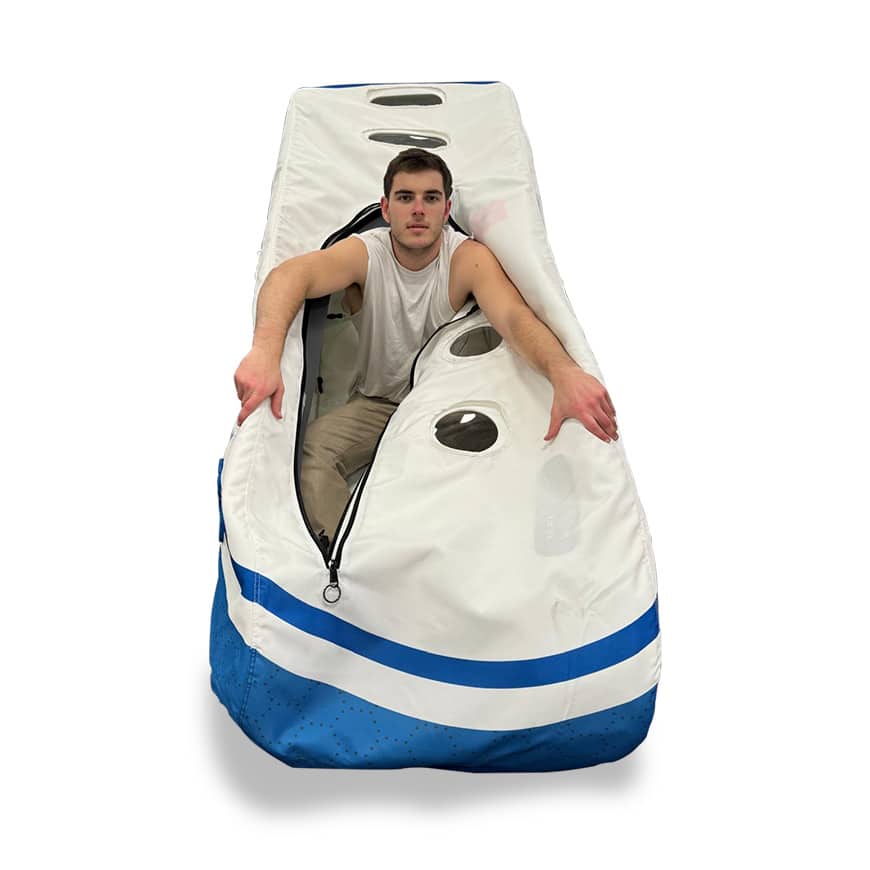
How Hyperbaric Oxygen Therapy Helps Prevent Sports Injuries
Hyperbaric oxygen therapy works as a recovery support tool that helps athletes manage training stress before fatigue turns into injury. Many athletes use hyperbaric oxygen therapy for athletes to support muscle recovery and maintain physical readiness across demanding training schedules. Improved oxygen delivery supports recovery efficiency, which plays a key role in injury prevention for athletes.
- Muscle Recovery Support: Increased oxygen availability supports muscle repair after intense sessions and helps reduce lingering fatigue.
- Soft Tissue Resilience: Better oxygen delivery supports connective tissue health during repetitive training cycles.
- Cumulative Stress Management: Faster recovery helps athletes tolerate higher workloads without excessive strain.
| Recovery Challenge | How HBOT Supports Recovery |
|---|---|
| Muscle fatigue | Enhanced oxygen availability |
| Repetitive strain | Support for tissue maintenance |
| High training volume | Improved recovery efficiency |
Practical application becomes clearer when examining how athletes use HBOT before and after training sessions.
Hyperbaric Oxygen Therapy Before and After Training
Timing plays an important role when athletes use hyperbaric oxygen therapy as part of a recovery strategy. Strategic use around training cycles helps support readiness, manage fatigue, and maintain recovery efficiency during demanding schedules.
- Before Training Blocks: Athletes often use oxygen therapy for athletes during intense or high volume phases to support recovery capacity and prepare the body for increased workload.
- After Training or Competition: HBOT supports cooldown routines and muscle recovery after exertion, which helps athletes return to training with better movement quality.
Understanding timing leads into an important question about how long the effects of hyperbaric oxygen therapy last.
How Long Do the Effects of Hyperbaric Oxygen Therapy Last?
Athletes often ask how long recovery benefits last after a session inside a hyperbaric chamber. Duration depends on how recovery fits into an overall training and wellness routine rather than on a single session outcome. Consistent use matters more than short term expectations when athletes explore HBOT sports recovery tools.
- Training intensity and frequency: Harder and more frequent sessions place greater demand on recovery systems
- Consistency of HBOT use: Regular sessions support more stable recovery patterns than occasional use
- Overall recovery habits: Quality sleep, balanced nutrition, and smart load management influence results
Recovery benefits build gradually and vary from person to person. Understanding individual response helps clarify who may benefit most from hyperbaric oxygen therapy for athletes focused on injury prevention.
Who May Benefit Most from HBOT for Injury Prevention?
Recovery needs vary based on sport demands, training volume, and individual workload. Hyperbaric oxygen therapy for athletes supports different recovery goals across multiple training environments. Athlete profile often determines how recovery tools contribute to injury prevention and long term performance.
- High impact or contact sport athletes: Repeated collisions and explosive movements place stress on muscles and connective tissue
- Endurance athletes: Long duration training creates repetitive strain that challenges soft tissue healing and recovery efficiency
- Aging athletes: Slower recovery capacity increases need for structured recovery support
- Coaches and trainers: Team recovery management benefits from consistent recovery tools that support availability
| Athlete Type | Primary Recovery Challenge |
|---|---|
| Endurance | Repetitive strain |
| Power or contact | Tissue stress and impact |
| Aging athletes | Slower recovery capacity |
Effective injury prevention combines hyperbaric oxygen therapy with smart training, recovery habits, and long term planning.
Using Oxygen as a Long Term Injury Prevention Strategy
Injury prevention starts with recovery quality rather than training volume alone. Athletes who focus on recovery protect tissue health, maintain movement control, and adapt better to repeated physical stress. Long term progress depends on how well the body restores itself between sessions, especially during demanding training cycles.
Cumulative stress often causes breakdown when recovery habits fall behind workload. Strong recovery routines support resilience, improve consistency, and help athletes remain available for training. Muscle recovery and oxygen therapy support how the body responds to physical demands across long seasons.
Hyperbaric oxygen therapy fits best within a balanced recovery plan that includes smart programming, sleep, and nutrition. Athletes looking to support long term durability can explore athlete focused hyperbaric chambers designed to fit modern training and recovery routines.
🏃 Explore Athlete Grade Recovery Systems
FAQs
How does hyperbaric oxygen therapy support injury prevention for athletes?
Hyperbaric oxygen therapy supports recovery by increasing oxygen availability during rest periods. Improved oxygen delivery helps muscles and connective tissue recover more efficiently, which supports injury prevention for athletes managing heavy training loads.
Can athletes use hyperbaric oxygen therapy without an existing injury?
Many athletes use HBOT sports recovery tools proactively. Regular recovery sessions help manage cumulative stress and support long term durability rather than addressing pain after injury occurs.
How often do athletes typically use hyperbaric oxygen therapy?
Usage frequency depends on training intensity, competition schedules, and overall recovery habits. Consistent sessions often provide more noticeable recovery support than occasional use.
Does hyperbaric oxygen therapy replace other recovery methods?
Hyperbaric oxygen therapy complements existing recovery practices such as sleep, nutrition, mobility work, and load management. Effective injury prevention relies on combining multiple recovery strategies.
Are hyperbaric chambers suitable for home use by athletes?
Many athletes choose home hyperbaric chambers to support ongoing recovery routines. Home based systems allow consistent access and easier integration into daily training schedules.
